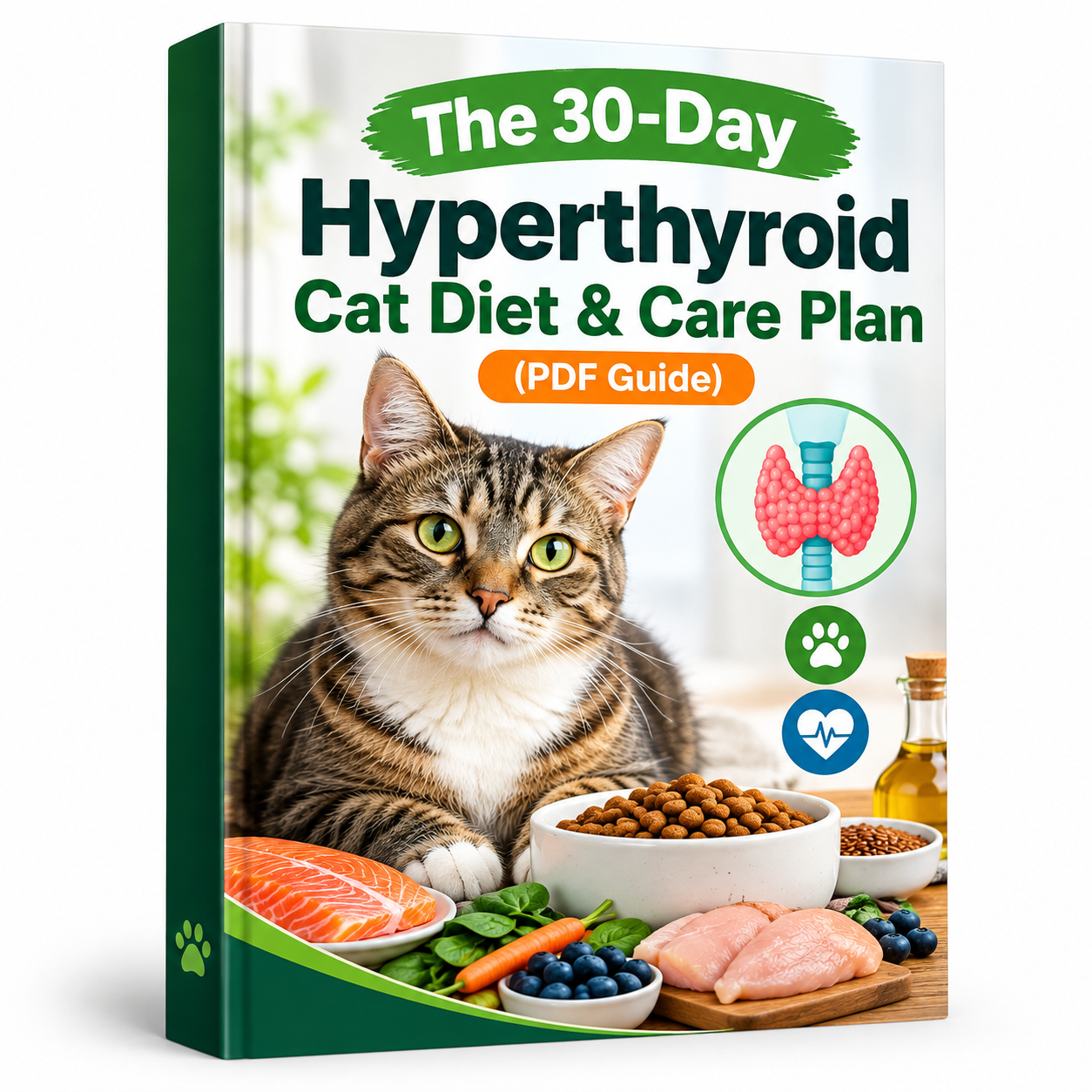
Your cat is eating more than ever, and still losing weight. You just left the vet with a diagnosis and a bag of food, and no idea what today, tomorrow, or next week should actually look like.
Feline hyperthyroidism is one of the most common health problems in older cats, and one of the most treatable, but only when the day-to-day details are handled right. This 30-day guide takes your vet’s instructions and turns them into a simple plan you can actually follow.
What’s inside:
- A plain-language breakdown of what hyperthyroidism is and why it causes weight loss, restlessness, and appetite changes
- The four treatment paths vets use, and how diet fits into each one
- The one rule that makes an iodine-restricted diet actually work (and why partial compliance keeps hormone levels high)
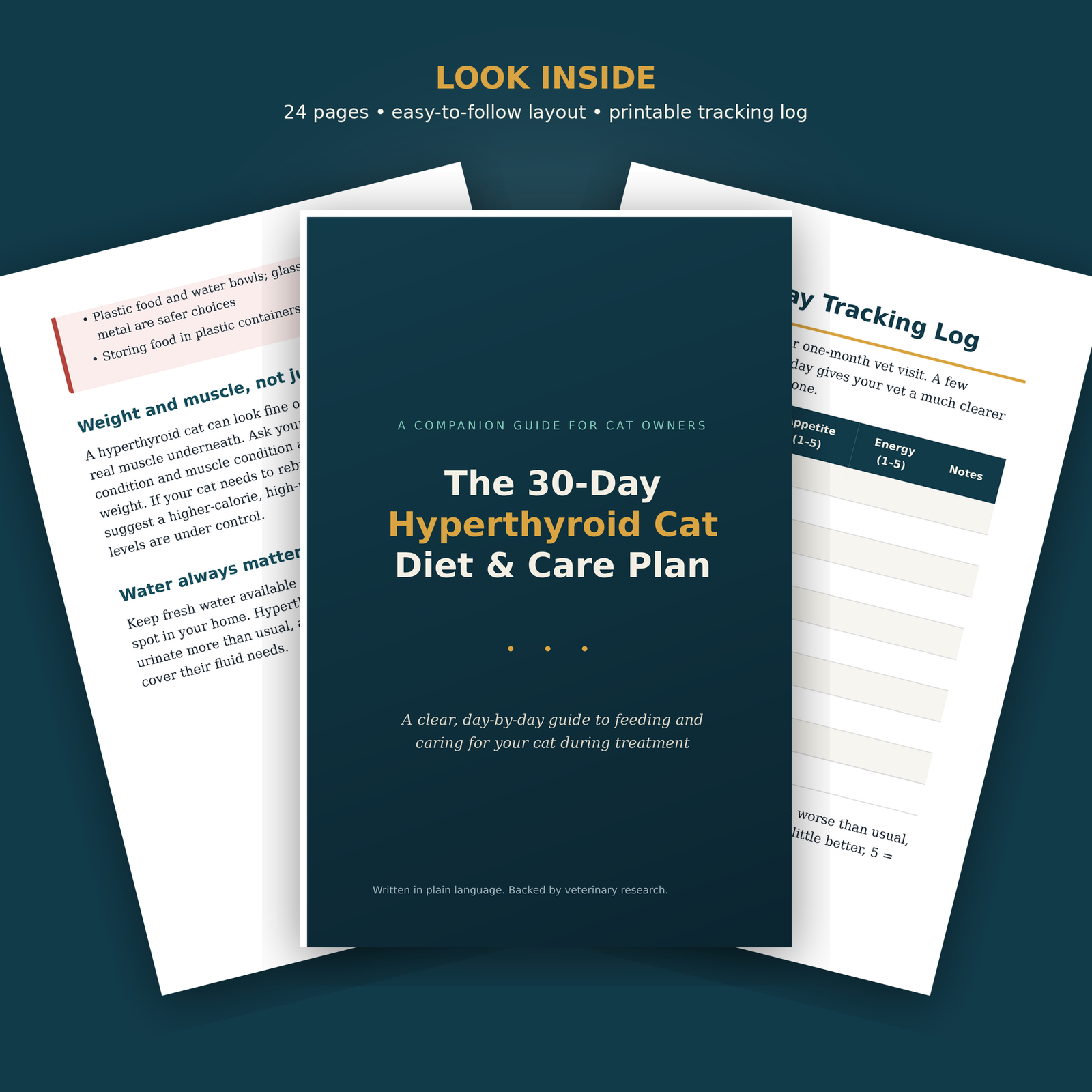
- A clear list of what to feed and what to avoid, including bowl materials and storage habits that matter more than owners expect
- A week-by-week, day-by-day plan covering the food transition, settling-in period, and one-month recheck
- Guidance on meal timing and portions for cats who act hungry all the time
- A warning-sign checklist for when to call the vet between visits
- Answers to the questions cat owners ask most, from multi-cat households to picky eaters
- A printable 30-day tracking log to bring to your vet appointment
This guide is written at an easy reading level, so you can use it the same day your cat is diagnosed, without wading through medical jargon. It’s built from veterinary hospital resources, pet nutrition sources, and a peer-reviewed feline diet study, with full source notes included.
This is a support tool for cat owners, not a replacement for veterinary care. It’s meant to sit next to your vet’s plan and make it easier to follow, not to diagnose or treat your cat on its own. Always work with your veterinarian to confirm diagnosis, choose treatment, and prescribe the right food.
Format: Instant-download PDF. Works on phone, tablet, computer, or in print.
Reviews
There are no reviews yet.