
You don’t need more willpower. You need a plan.
Most people don’t eat enough fruits and vegetables — not because they don’t know it matters, but because knowing and doing are two different things. Knowing broccoli is good for you doesn’t tell you what to cook for dinner on a Tuesday when you’re tired and the fridge feels empty.
That’s the gap this guide closes.
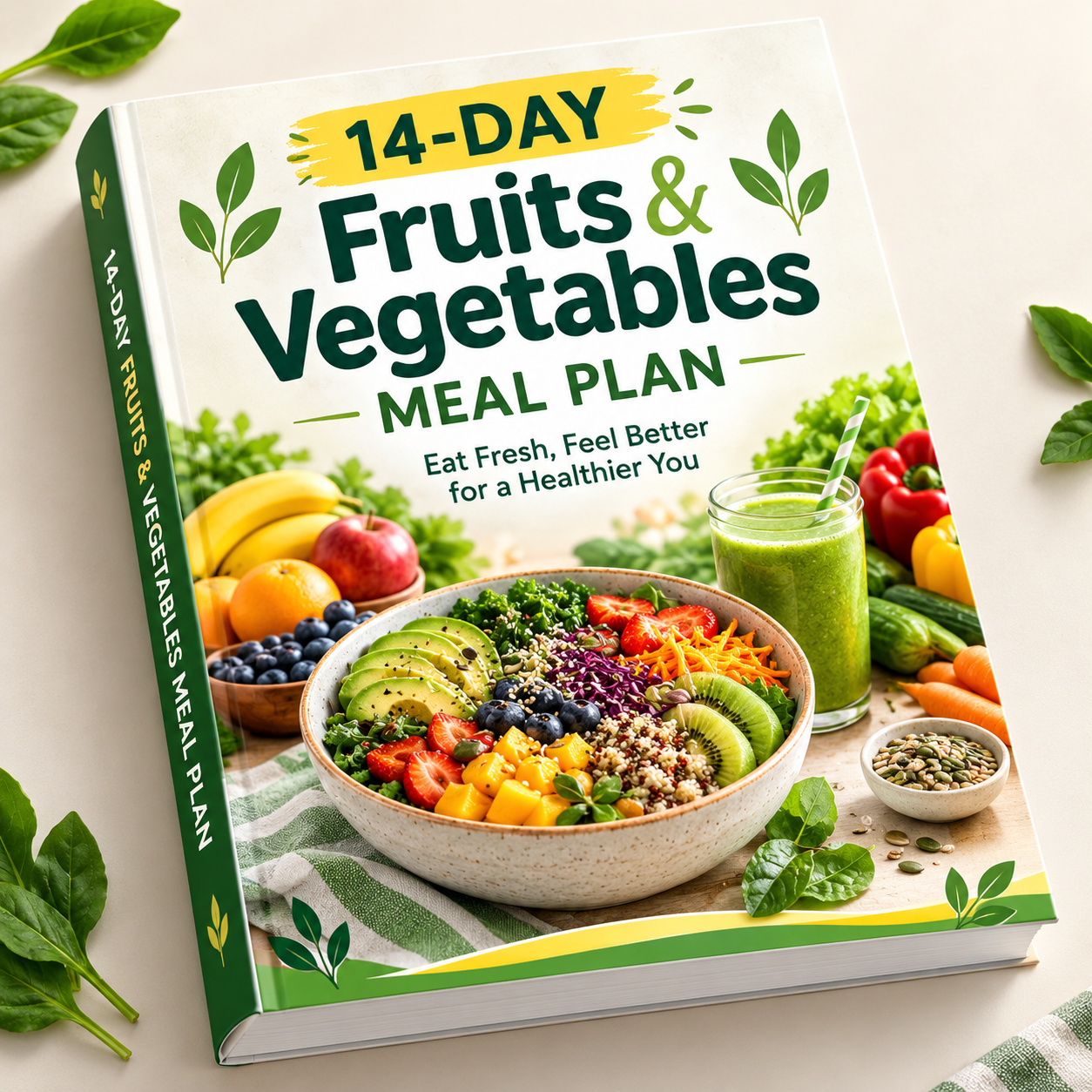
The 14-Day Fruits & Vegetables Meal Plan is a complete, done-for-you system: every breakfast, snack, lunch, and dinner mapped out for two full weeks, built almost entirely around produce, with the shopping lists and prep work already figured out for you. You open the PDF, you see what’s for breakfast, and you make it. That’s the whole system.
This isn’t a “detox.” It isn’t a fast. There’s no promise that kale will melt fat off your body overnight, because that’s not how food works, and you deserve better than marketing claims that don’t hold up. What you get instead is a realistic, well-organized way to build a genuinely good habit — eating more fruits and vegetables, consistently, for two weeks — with a clear, honest explanation of how to make it safe and sustainable, and exactly what to do once Day 14 is behind you.
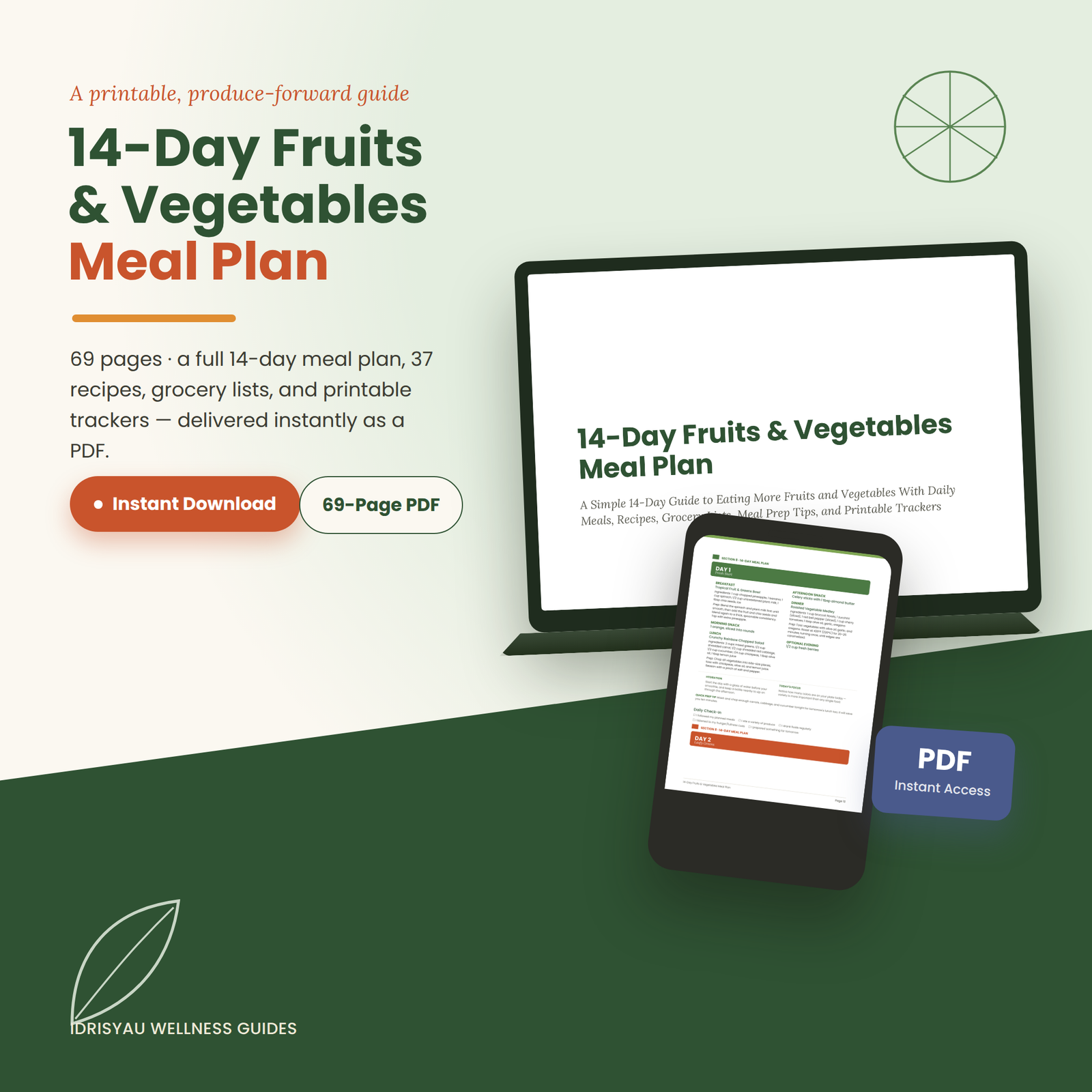
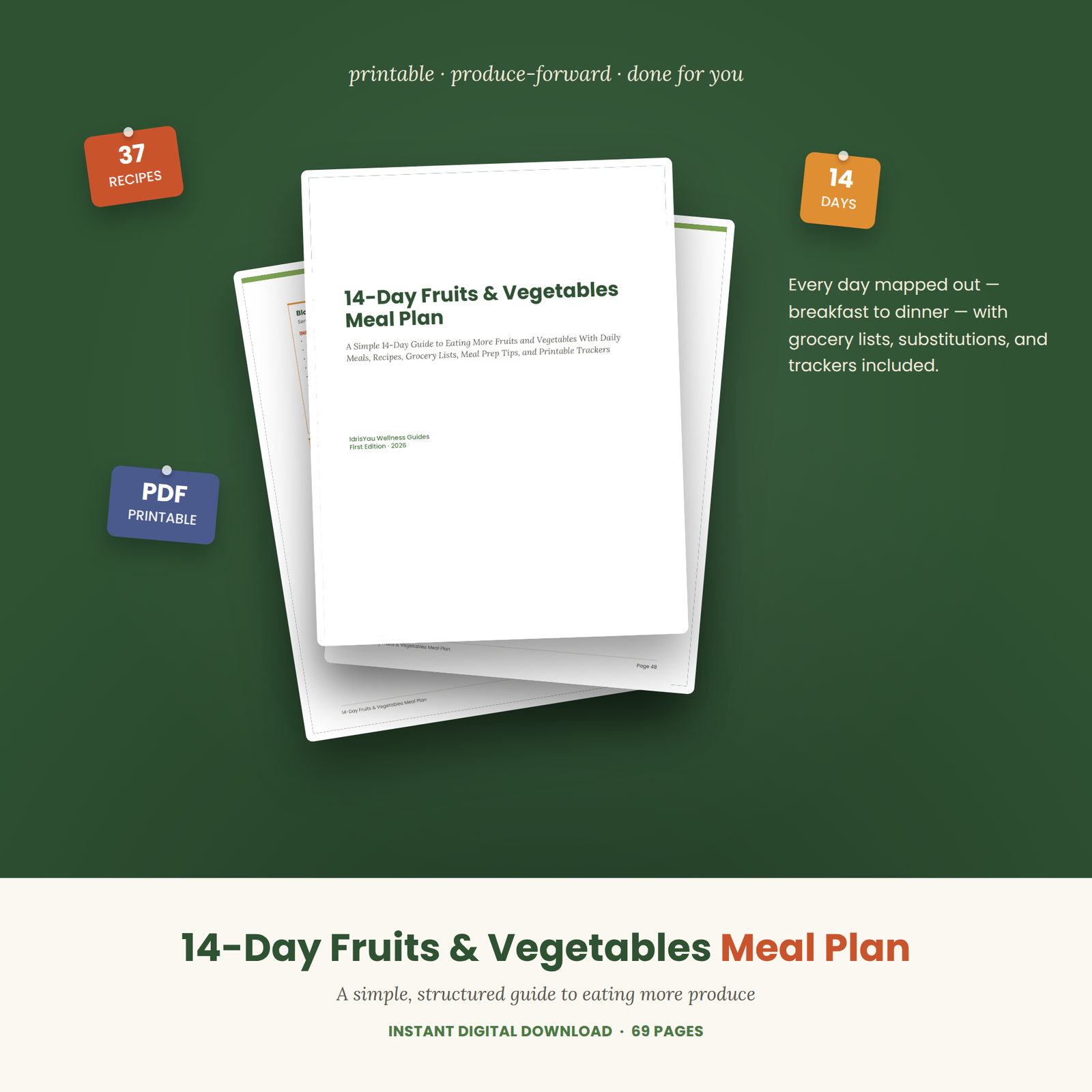
What’s inside the 69-page guide
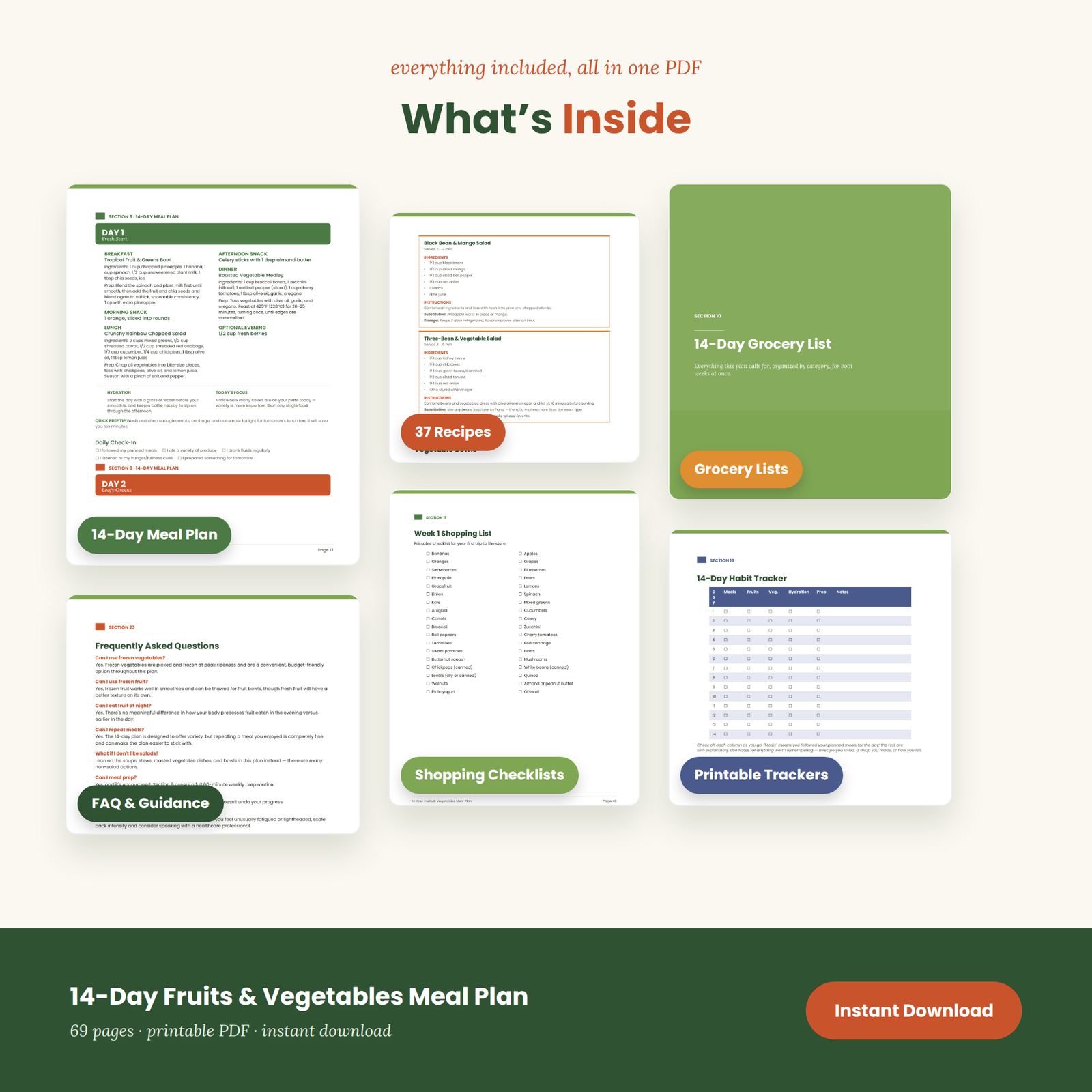
A complete 14-day, meal-by-meal schedule. Every single day includes a breakfast, a morning snack, a lunch, an afternoon snack, a dinner, and an optional light evening fruit or vegetable serving — 14 different days, no repeats, each with its own theme (Leafy Greens, Citrus & Roots, Mediterranean-Inspired, Tropical Reset, Global Flavors, and more). Every main meal comes with the ingredient list and simple prep steps right on the page, so you’re never guessing. Each day also includes a hydration reminder, a “today’s focus” habit tip, a quick prep tip to save you time tomorrow, and a five-item daily check-in you can tick off as you go.
37 simple recipes, organized by category, so you can mix, match, and repeat your favorites:
- Fruit-Based Breakfasts
- Vegetable Breakfasts
- Salads
- Vegetable Bowls
- Cooked Vegetable Mains
- Fruit Snacks
- Vegetable Snacks
- Smoothies
Every recipe lists servings, prep time, ingredients, step-by-step instructions, a substitution suggestion, and storage guidance — so you can prep once and eat well for days.
A full grocery system, so shopping takes minutes instead of guesswork:
- A combined 14-day grocery list broken into fruits, vegetables, and herbs/flavorings, with approximate quantities for one adult
- A separate, printable Week 1 shopping checklist
- A separate, printable Week 2 shopping checklist
A 25+ item substitution guide, so a missing ingredient never derails your day — swap spinach for kale, broccoli for cauliflower, mango for papaya, and dozens more, all organized so the swap keeps the recipe nutritionally sensible.
A dedicated African & Nigerian produce section, covering how to work pawpaw, guava, garden egg, ugu, okra, waterleaf, and bitter leaf into the plan — because a meal plan should work with what’s actually available in your market, not force you to hunt down ingredients you can’t find.
Real-world guidance for real life:
- A 60-minute weekly meal-prep routine (wash, chop, portion, store — done once, used all week)
- A portion and serving guide that doesn’t require a food scale
- Tips for eating on a budget, storing produce so it doesn’t spoil, and staying on track when you eat out
- A “Cravings, Hunger & Challenges” section that tackles the real obstacles head-on — “I don’t like vegetables,” “I’m tired of salads,” “my family isn’t on board” — with practical, judgment-free fixes
Printable trackers and worksheets to keep you consistent and help the habit stick:
- A 14-day habit tracker
- A daily journal template
- A blank weekly meal-planning worksheet
- A final “My 14-Day Completion Checklist” to reflect on what worked
An honest nutrition and safety section — the part most diet PDFs skip. This guide is upfront that a diet made up only of fruits and vegetables isn’t nutritionally complete for the long term, and explains in plain language what to pay attention to (protein, vitamin B12, calcium, vitamin D, iron, zinc, iodine, and essential fats), who should talk to a healthcare professional before starting a restrictive eating pattern, and when to stop and seek medical care. Every meal in the plan includes small, clearly labeled amounts of things like legumes, whole grains, nuts, seeds, and olive oil specifically so the plan stays realistic and safe rather than extreme.
A clear plan for what comes after Day 14. This guide was never meant to be followed forever, and it says so directly — with a full section on how to transition back into a varied, balanced way of eating that keeps the habits you built without keeping the restriction.
15 frequently asked questions, answering the things people actually wonder mid-plan — can I use frozen produce, can I repeat meals, what if I miss a day, can I follow this longer than 14 days, what if I feel hungry or unwell.
A references section grounded in recognized nutrition sources (including U.S. government health agencies and peer-reviewed research), because health claims should be able to point to where they came from.
Who this is for
This guide is built for adults who want a simple, structured way to eat more fruits and vegetables — whether that’s the whole goal, or a starting point toward better habits overall. It’s a good fit if you:
- Keep meaning to “eat healthier” but run out of ideas by Wednesday
- Want the shopping and planning done for you, not left as homework
- Are curious about a short-term, produce-focused reset without diving into anything extreme
- Want recipes that use real, easy-to-find ingredients — including options for Nigerian and African kitchens
- Like having something to check off and track, rather than a vague intention to “do better”
This guide is not designed for children or adolescents, and it isn’t a substitute for individualized medical or nutrition advice. If you’re pregnant or breastfeeding, managing diabetes, kidney disease, a gastrointestinal condition, a history of disordered eating, or any condition that requires a specialized diet, please read the safety section first and check with a healthcare professional before starting.
What you’ll actually be able to do after two weeks
By the end of the 14 days, you won’t just have eaten more produce — you’ll have a working system: a rotation of meals you know how to make, a shopping list format that works for you, and a realistic sense of how a vegetable-forward plate can fit into your actual life. Section 22 walks you through exactly how to carry that forward into a varied, balanced way of eating, so the two weeks become a foundation, not a phase that ends and disappears.
Format & delivery
- Format: Digital PDF, 69 pages, designed for both screen reading and home printing
- Delivery: Instant download after purchase — no waiting, no shipping
- Use: Print the shopping lists and trackers, or keep the whole guide on your phone or tablet for reference at the store and in the kitchen
- Access: Yours to keep and reuse for as many 14-day rounds as you like
A quick note on honesty
You’ll notice this description doesn’t promise weight loss, a “detox,” or a cure for anything. That’s on purpose. Fruits and vegetables are genuinely good for you — full of fiber, water, vitamins, minerals, and plant compounds — and increasing your intake of them is a reasonable, well-supported goal on its own. This guide is built to help you actually do that, consistently, for two weeks, with a clear-eyed explanation of its limits and a real plan for what comes next. If that’s what you’re looking for, this is built for you.
Reviews
There are no reviews yet.