
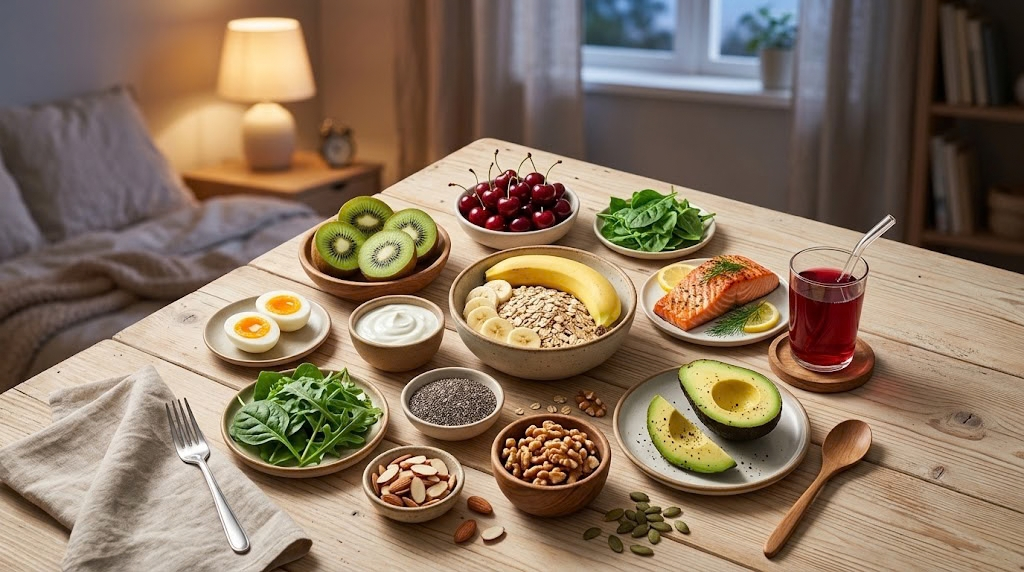

If you’ve spent a night staring at the ceiling after a heavy, greasy dinner, you already know food and sleep are connected. What’s less obvious is that the connection runs both ways, all day long — not just in the hour before bed.
There’s no single “sleep food” that flips a switch and knocks you out. What the research actually points to is something less flashy but more useful: a pattern of eating — enough fiber, a reasonable amount of protein, fewer ultra-processed snacks, and sensible meal timing — that adds up to better sleep over weeks, not minutes. A University of Michigan analysis of national dietary data found that adults who didn’t meet basic recommendations for fruits, vegetables, legumes, and whole grains slept for shorter stretches, and that people who increased their fruit and vegetable intake over a few months reported fewer insomnia symptoms.
This guide walks through the individual foods with the most consistent research behind them, the nutrients involved, what to eat (and skip) before bed, a full 7-day sleep-friendly meal plan, and where Indian cuisine and traditional remedies fit into the picture — all without pretending any single ingredient is a cure for insomnia.
If you’d rather skip the planning and just follow a ready-made structure, our What to Eat Before Bed for Better Sleep ebook lays out exact food pairings, portion guidance, and a printable weekly plan.
What Are Foods for “Deep Sleep”?
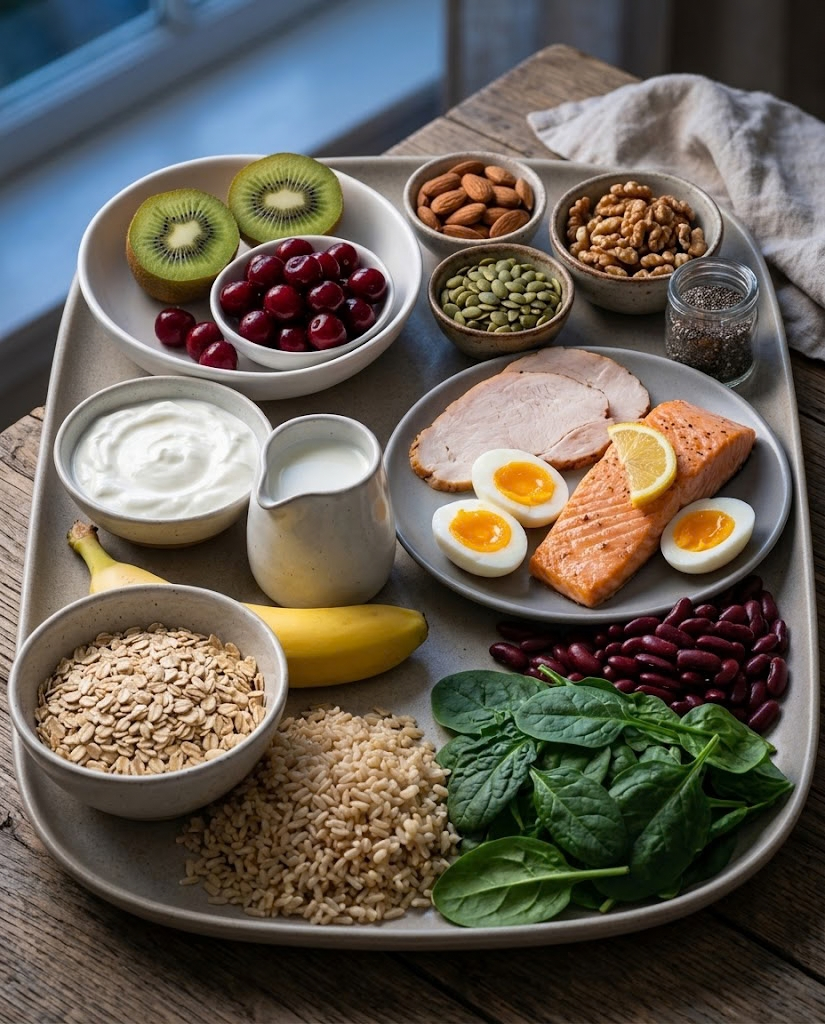
When people search “foods for deep sleep,” they’re usually hoping for a shortcut — one ingredient that guarantees a night of uninterrupted, restorative sleep. That food doesn’t exist.
What does exist is a body of nutrition research showing that certain foods contain compounds — melatonin, tryptophan, magnesium, and others — that are involved in the biological processes your body uses to regulate sleep. A recent scientific review on nutritional interventions for sleep quality describes this as a genuinely active area of research, covering everything from individual nutrients to broader dietary patterns like the Mediterranean diet, but it’s still an emerging field rather than a settled one.
In practice, “foods for deep sleep” is shorthand for foods that:
- Supply nutrients your body uses in sleep-related processes (tryptophan, magnesium, B6)
- Are unlikely to disrupt digestion or blood sugar right before bed
- Fit into an overall diet pattern already linked to better sleep quality
Think of these foods as supporting players in a bigger picture — good sleep hygiene, a consistent bedtime, and a balanced diet — rather than a magic fix on their own.
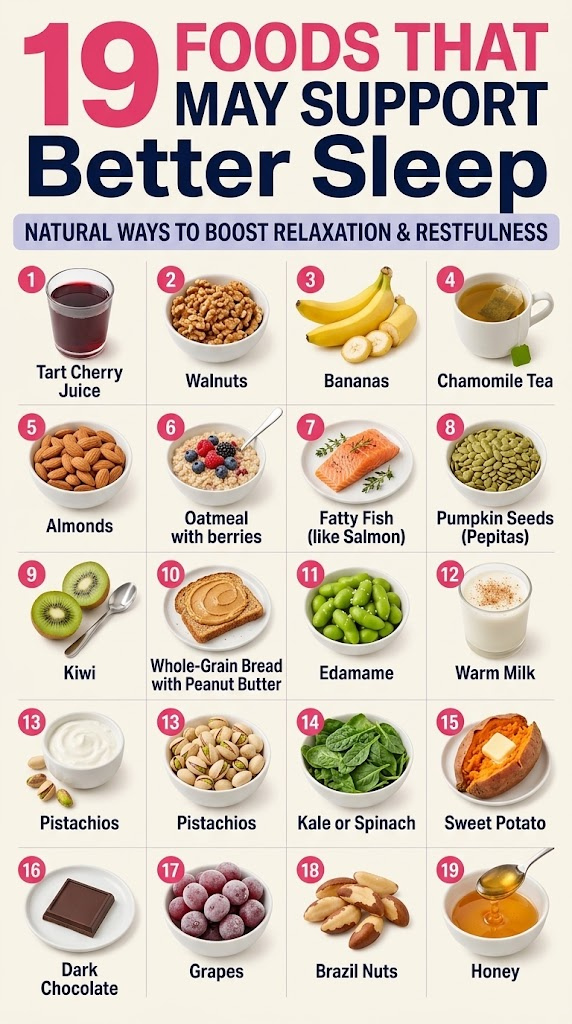
19 Foods That May Support Better Sleep
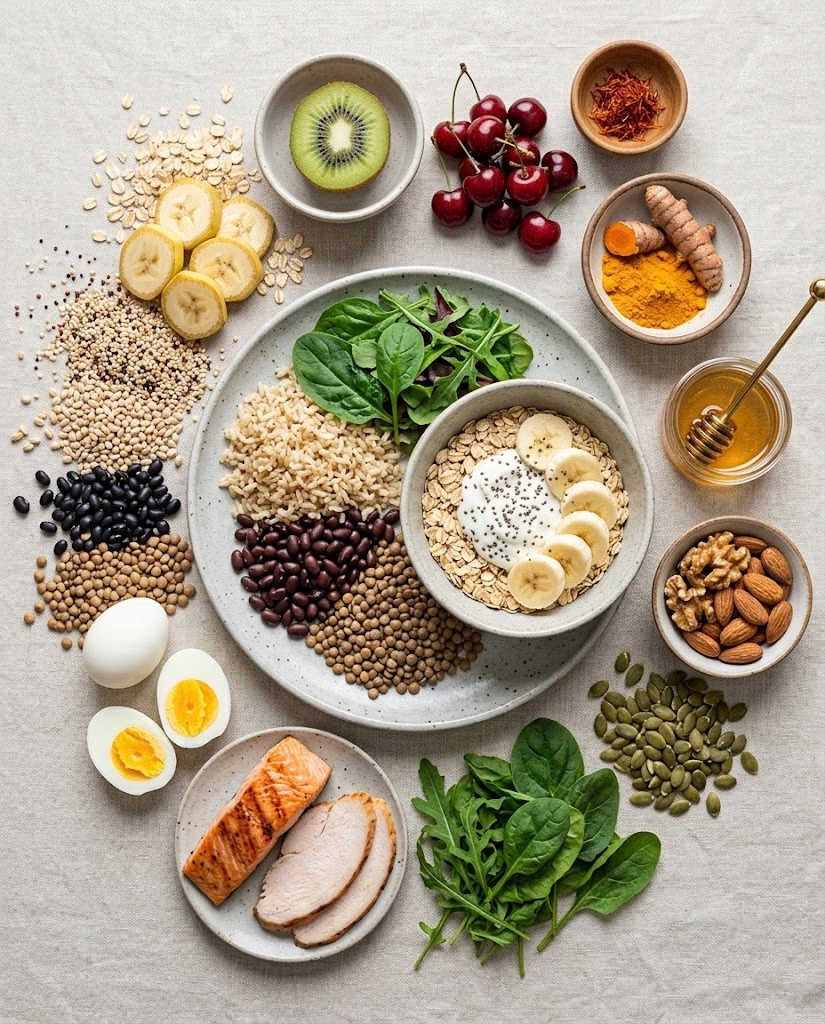
Here’s a closer look at the foods with the most reasonable evidence behind them. None of these are guaranteed to improve your sleep by themselves, but they’re worth building into your regular rotation.
1. Kiwi
Kiwi is one of the more studied fruits for sleep. It’s rich in serotonin precursors, antioxidants, and folate. A ScienceDirect review on diet and sleep quality specifically names kiwi as one of a small handful of foods with clinical research behind it for improving sleep duration and quality, alongside milk, fatty fish, and tart cherry juice.
- Try it: Two kiwis, roughly an hour before bed, either sliced or blended into a small smoothie.
- Safety note: Kiwi can trigger oral allergy symptoms in people sensitive to birch pollen or latex.
2. Tart Cherries (and Tart Cherry Juice)
Tart cherries are one of the few fruits that naturally contain measurable amounts of melatonin. They also carry anti-inflammatory compounds. Tart cherry juice appears repeatedly in sleep-nutrition reviews as one of the more consistently studied options.
- Try it: A small glass of 100% tart cherry juice in the evening, or a handful of dried tart cherries mixed into oats.
- Safety note: Cherry juice is high in natural sugar — go easy if you’re managing blood sugar.
3. Chia Seeds
Chia seeds bring magnesium, fiber, and a small amount of tryptophan to the table. Their main appeal for an evening snack is practical: they thicken into a pudding-like texture that feels satisfying without being heavy.
- Try it: Chia pudding made with milk or a plant-based alternative, chilled for a few hours.
- Safety note: Always soak chia seeds in liquid before eating; dry seeds can be a choking hazard.
4. Oats
Oats are a whole-grain carbohydrate source with fiber and a modest amount of melatonin. Whole grains as a food group are consistently linked to better sleep quality in dietary-pattern research, likely because they support more stable blood sugar overnight.
- Try it: A small bowl of warm oatmeal with banana slices as an evening snack.
- Safety note: Skip the added sugar toppings if you’re prone to a mid-night energy crash.
5. Bananas
Bananas contain magnesium, potassium, and a small amount of tryptophan. They’re also easy on digestion, which matters more than any single nutrient when you’re eating close to bedtime.
- Try it: Sliced banana with a spoonful of nut butter.
- Safety note: Very ripe bananas have a higher sugar content — fine for most people, worth noting if you’re sensitive to sugar swings at night.
6. Almonds
Almonds provide magnesium and healthy fats in a small, portion-controlled package.
- Try it: A small handful (about 10-12 almonds) as a simple bedtime snack.
- Safety note: Tree nut allergy is common — obviously skip if that applies to you, and keep portions modest since nuts are calorie-dense.
7. Walnuts
Walnuts are one of the few whole foods that naturally contain melatonin, along with healthy fats and plant compounds. A 2025 review on foods and sleep mechanisms points to a human study in which daily intake of about 15 grams of whole walnuts — roughly a small handful — was associated with better subjective sleep quality and cognitive performance in older men. That’s a modest, single study, not a guarantee, but it’s a specific and encouraging data point.
- Try it: A small handful on their own, or stirred into oatmeal or yogurt.
- Safety note: Tree nut allergy applies here too; watch portions for calorie density.
8. Greek Yogurt
Greek yogurt combines protein, calcium, and (in fermented varieties) probiotics. Protein-rich evening snacks are generally associated with steadier overnight blood sugar, which can mean fewer middle-of-the-night wake-ups from hunger.
- Try it: Plain Greek yogurt with a few tart cherries or a drizzle of honey.
- Safety note: Choose plain, unsweetened varieties to avoid a sugar spike before bed.
9. Milk
Milk is probably the most “classic” sleep food, and it holds up reasonably well in the research. It supplies tryptophan, calcium, and vitamin D (in fortified versions), and warm milk in particular has a long-standing association with bedtime routines that may work partly through simple comfort and ritual.
- Try it: A small glass of warm milk with a pinch of cinnamon.
- Safety note: Not a fit for people with lactose intolerance or a dairy allergy — plant-based milks won’t offer the same tryptophan content but can still fit a calming bedtime routine.
10. Eggs
Eggs are a complete protein source with choline and small amounts of tryptophan and vitamin B6, a nutrient involved in the pathway your body uses to make serotonin and melatonin.
- Try it: Eggs work better earlier in the evening as part of dinner than as a heavy late-night snack.
- Safety note: If egg allergy applies to you, obviously skip.
11. Turkey
Turkey is often mentioned for its tryptophan content, though the “turkey makes you sleepy” idea is oversimplified — most poultry and lean meats contain similar tryptophan levels, and the sleepiness after a big turkey dinner has more to do with the size of the meal and accompanying carbohydrates.
- Try it: A modest portion at dinner, paired with vegetables and a whole grain rather than a large, heavy plate.
- Safety note: None specific, beyond standard poultry food-safety handling.
12. Fatty Fish (Salmon, Mackerel, Sardines)
Fatty fish supply omega-3 fatty acids, vitamin D, and tryptophan. Fatty fish is one of the specific foods named in the ScienceDirect diet-and-sleep review as having research support for improving sleep outcomes, with the combination of vitamin D and omega-3s proposed as a contributing mechanism.
- Try it: Baked or grilled salmon at dinner, a few hours before bedtime.
- Safety note: Watch mercury content in larger fish species if you’re pregnant or breastfeeding.
13. Pumpkin Seeds
Pumpkin seeds are a concentrated source of magnesium and also contain tryptophan.
- Try it: A small handful on their own, or sprinkled over yogurt or oatmeal.
- Safety note: Calorie-dense — stick to a small portion (about a tablespoon or two).
14. Spinach and Other Leafy Greens
Leafy greens like spinach are a solid plant-based magnesium source and also bring folate and other micronutrients that support overall diet quality.
- Try it: Add spinach to dinner rather than as an evening snack, since raw greens close to bedtime can cause discomfort for some people.
- Safety note: Spinach is high in vitamin K, which matters if you’re on blood thinners — check with your doctor about consistent intake.
15. Beans and Legumes
Beans, lentils, and chickpeas provide fiber, plant protein, magnesium, and B vitamins. Diets higher in legumes and fiber are consistently linked to better sleep quality in population-level research.
- Try it: A lentil soup or bean-based dinner, several hours before bed to allow digestion.
- Safety note: Can cause bloating for some people if eaten too close to bedtime — timing matters more than the food itself here.
16. Whole Grains
Whole grains (oats, brown rice, quinoa, whole wheat) supply fiber, B vitamins, and a modest, steady release of carbohydrate energy. As a category, whole grains show up repeatedly in dietary-pattern studies as one of the stronger predictors of better sleep duration and quality.
- Try it: Swap refined grains for whole-grain versions at dinner.
- Safety note: None specific, aside from standard gluten considerations for those with celiac disease or gluten sensitivity.
17. Saffron
Saffron has a long history of traditional use for mood and relaxation, and some smaller human studies have looked at it for sleep and mild anxiety symptoms. The evidence is early-stage and shouldn’t be overstated — it’s promising as a culinary spice, not established as a sleep treatment.
- Try it: A pinch steeped in warm milk (see the Indian foods section below).
- Safety note: High-dose saffron supplements are a different matter than culinary use in cooking — stick to normal food amounts unless a healthcare provider advises otherwise.
18. Turmeric
Turmeric’s curcumin content has anti-inflammatory properties that are well documented in general nutrition research, and chronic inflammation is one of several factors that can interfere with sleep. That said, there’s no strong direct evidence that turmeric on its own improves sleep — its relevance here is more about supporting overall diet quality.
- Try it: Turmeric milk (golden milk) as an evening drink.
- Safety note: Turmeric can interact with blood thinners; check with a doctor if that applies to you.
19. Honey
Honey provides a small amount of natural sugar that some people use in a bedtime drink, often paired with warm milk. The evidence for honey specifically improving sleep is mostly traditional and anecdotal rather than clinical, so treat it as a mild sweetener choice rather than a sleep aid.
- Try it: A teaspoon stirred into warm milk or herbal tea.
- Safety note: Never give honey to infants under 12 months due to botulism risk.
Want these paired into ready-to-use combinations instead of piecing it together yourself? Our What to Eat Before Bed for Better Sleep ebook does that math for you.
Best Foods to Eat Before Bed
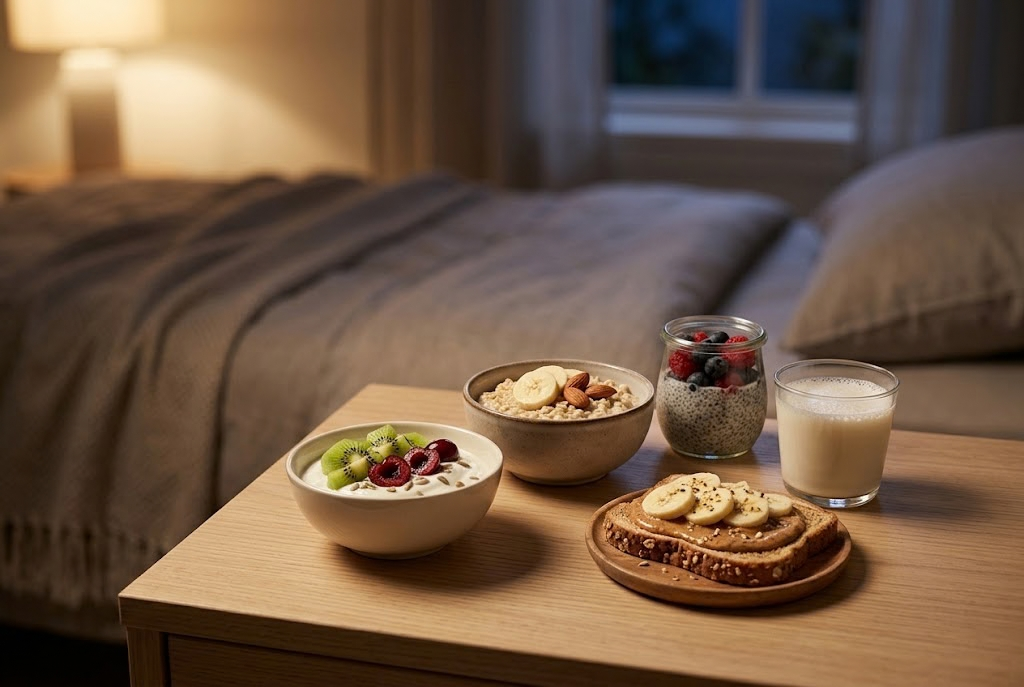
Not everyone needs a bedtime snack — if you’re not hungry, there’s no rule that says you must eat before sleep. But if you tend to wake up hungry, or you eat dinner early, a small, well-chosen snack an hour or so before bed can help.
Good combinations to consider:
- Kiwi + Greek yogurt — fruit, protein, and a bit of calcium
- Oatmeal + banana slices — whole grain plus a touch of natural sweetness
- Chia pudding — fiber, magnesium, and a satisfying texture
- Banana + nut butter — potassium, magnesium, and healthy fat
- Greek yogurt + tart cherries — protein plus a natural melatonin source
- Warm milk + cinnamon — a classic, comforting combination
- Whole-grain toast + nut butter — fiber and protein in a simple form
A heavy, large meal right before bed can cause discomfort, reflux, or fragmented sleep for a lot of people — but that’s a digestion issue, not a rule that applies equally to everyone. If a bigger dinner works fine for you, there’s no need to force a change. The goal is comfort, not a strict formula.
Foods Rich in Nutrients Linked to Sleep
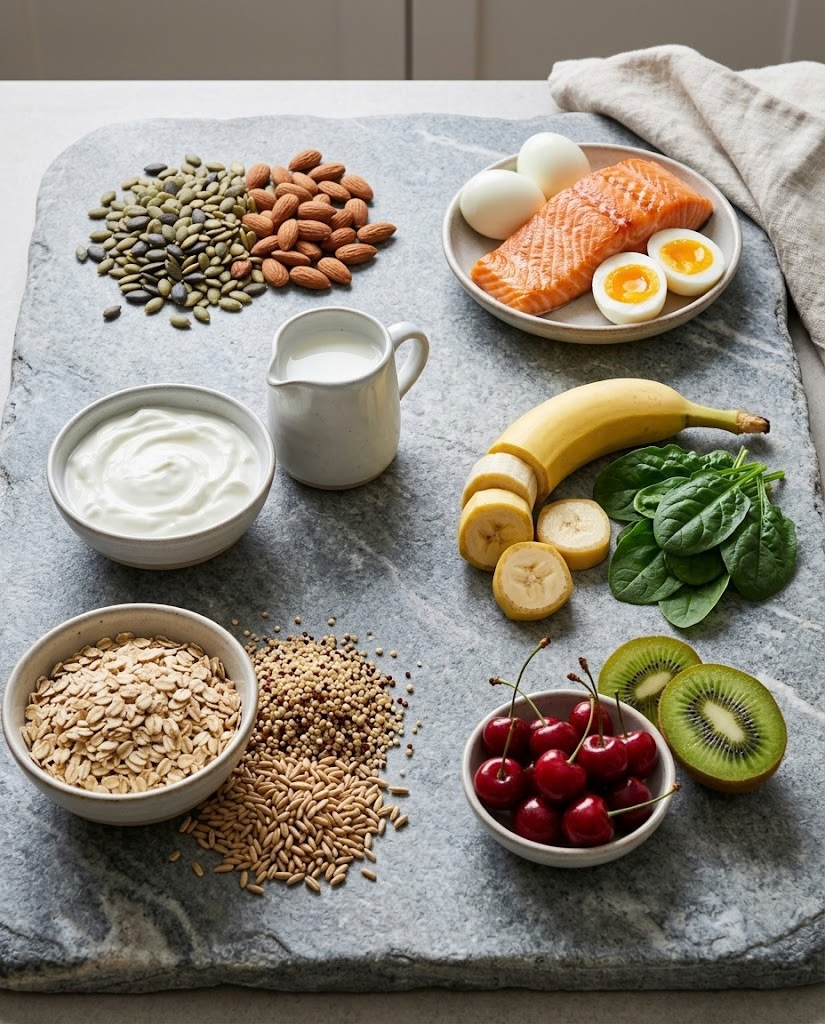
Rather than memorizing a food list, it can help to understand the nutrients behind it. Here’s what the research actually says about each one.
Magnesium
Magnesium is involved in nerve and muscle function and in regulating the neurotransmitter GABA, which plays a calming role in the nervous system. Low magnesium intake has been associated with poorer sleep in some studies, though a magnesium-rich diet isn’t a guaranteed fix for insomnia.
Good sources: pumpkin seeds, almonds, spinach, chia seeds, beans, whole grains
Tryptophan
Tryptophan is an essential amino acid your body uses to produce serotonin, which is then converted into melatonin. Eating a tryptophan-rich food doesn’t instantly boost melatonin, though — tryptophan has to compete with other amino acids to cross into the brain, and that process is influenced by the rest of the meal (a bit of carbohydrate alongside protein is thought to help). This is why the “eat turkey and pass out” idea is an oversimplification, even though the underlying biochemistry is real.
Good sources: turkey, eggs, milk, fatty fish, pumpkin seeds
Melatonin
A small number of foods — tart cherries and walnuts among them — contain naturally occurring melatonin. The amounts in food are generally much smaller than what’s in a melatonin supplement, so think of these foods as a gentle nutritional contribution rather than a substitute for melatonin as a medication.
Good sources: tart cherries, walnuts, oats (in smaller amounts)
Calcium
Calcium is involved in the process your brain uses to convert tryptophan into melatonin. It’s one more reason dairy and fortified plant milks show up so often in sleep-nutrition discussions.
Good sources: milk, Greek yogurt, fortified plant milks, leafy greens
Vitamin B6
Vitamin B6 is a cofactor in the conversion of tryptophan to serotonin. A deficiency can interfere with this pathway, though most people who eat a varied diet get enough.
Good sources: fatty fish, eggs, bananas, chickpeas
Carbohydrates and Sleep
The relationship between carbohydrates and sleep is more nuanced than “carbs make you sleepy.” Some research has found that a moderate amount of carbohydrate, especially earlier in the evening, may help tryptophan cross into the brain more easily. But this doesn’t mean loading up on refined carbs before bed is a good idea — the type and timing matter more than the simple presence of carbohydrate. Whole-grain, fiber-rich carbohydrates paired with protein are a more balanced approach than a large plate of white pasta or bread late at night.
Drinks That May Support Better Sleep

A few beverages come up consistently in sleep-nutrition research:
- Tart Cherry Juice — one of the more studied options, thanks to its natural melatonin and antioxidant content.
- Warm Milk — combines tryptophan and calcium with the simple comfort of a bedtime ritual.
- Chamomile Tea — widely used traditionally for relaxation; the clinical evidence for sleep specifically is mixed but generally considered low-risk for most adults.
- Lemon Balm Tea — another traditional calming tea with some early research behind it, though not at the level of a proven treatment.
This is a nutrition-focused list, not a guide to supplements or herbal extracts — if you’re interested in concentrated herbal products beyond a cup of tea, see the section on herbs and natural remedies further down.
Indian Foods for Better Sleep
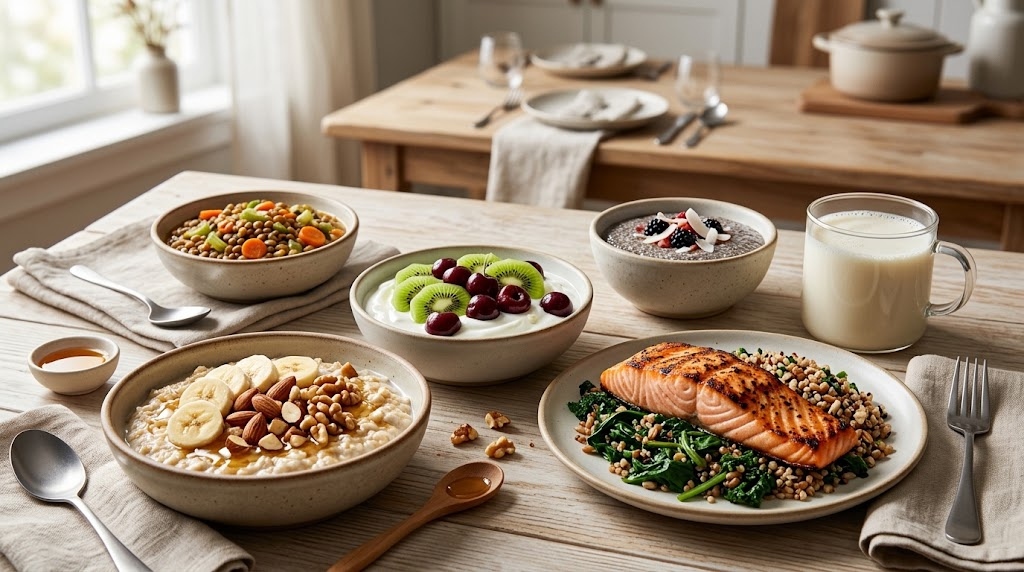
If you’re building an evening meal around Indian cuisine, several familiar ingredients fit naturally into a sleep-supportive pattern — without needing anything unusual or hard to find.
- Saffron milk (kesar doodh) — warm milk with a pinch of saffron, sometimes with a touch of honey. Combines calcium and tryptophan from the milk with the traditional use of saffron for relaxation.
- Turmeric milk (haldi doodh) — a staple in many households, pairing milk’s nutrients with turmeric’s anti-inflammatory compounds.
- Curd (dahi) or yogurt — a common evening food in many Indian households, offering protein, calcium, and probiotics.
- Khichdi — a simple, easily digested combination of rice and lentils, gentle on the stomach for an early dinner.
- Nuts like almonds and walnuts (badam, akhrot) — often eaten as an evening snack, and they line up with the magnesium and melatonin content discussed earlier.
- Chia seeds, oats, and whole grains — increasingly common additions to Indian breakfasts and dinners, and they carry the same fiber and nutrient benefits described above.
- Nutmeg (jaiphal) and poppy seeds (khus khus) — used traditionally in small amounts in some households for their calming reputation. It’s worth being clear here: this is traditional and culinary use, not a clinically proven sleep treatment, and nutmeg in particular can cause unpleasant effects at doses well above normal cooking amounts.
The common thread across these dishes is that they’re light, easy to digest, and built around the same nutrients — tryptophan, calcium, magnesium — discussed throughout this guide. Traditional use and nutritional value are worth respecting on their own terms; neither one should be mistaken for a guarantee backed by clinical trials.
Worst Foods for Sleep
Just as some foods may support sleep, others tend to work against it — though individual tolerance varies quite a bit from person to person.
- Caffeine — Caffeine can interfere with falling asleep even when consumed several hours before bed, since its effects last longer than most people realize. The University of Michigan sleep research specifically notes that caffeine consumed as much as six hours before bedtime can still make it harder to fall asleep.
- Energy Drinks — Combine high caffeine with large amounts of added sugar, a combination that can disrupt sleep more than caffeine alone.
- Alcohol — Alcohol can make you feel drowsy initially, but it disrupts sleep architecture later in the night, cutting into REM sleep and increasing nighttime waking.
- Very Heavy Meals — Large meals close to bedtime can cause discomfort, indigestion, or reflux, all of which interfere with falling and staying asleep.
- Very Spicy Meals — For people prone to reflux or heartburn, spicy food close to bedtime can be a trigger.
- Large Amounts of Added Sugar — Diets high in added sugar and refined carbohydrates have been linked to more fragmented, lower-quality sleep.
- Very Fatty, Fried Foods Close to Bedtime — Saturated fat intake has been associated with less slow-wave sleep, the deep, restorative stage of the sleep cycle.
None of this means an occasional coffee or a slice of pizza will ruin your sleep for good — it’s the consistent pattern that matters more than any single meal.
Foods to Avoid Before Bed: Timing Matters
There’s no universal rule like “never eat after 7 p.m.” Meal timing is personal, and it depends on your bedtime, how large your meal is, and how your digestion responds.
A few practical guidelines that hold up better than rigid cutoffs:
- Leave roughly 2-3 hours between a full meal and bedtime when possible, especially for larger or heavier meals.
- A small, light snack closer to bedtime is generally fine for most people, particularly if you tend to wake up hungry.
- Pay attention to your own patterns — if a specific food or meal size consistently disrupts your sleep, that’s more useful information than a generic rule.
- If you eat late because of work or lifestyle, prioritize lighter, easier-to-digest options over large, rich meals.
Healthy Bedtime Snack Ideas
Here are simple, sleep-friendly snacks you can put together in under 10 minutes.
1. Kiwi and Greek Yogurt Bowl Ingredients: 2 kiwis, ½ cup plain Greek yogurt. Prep time: 5 minutes. Why: Combines a naturally researched sleep-supportive fruit with protein and calcium. Swap: Use tart cherries instead of kiwi.
2. Warm Cinnamon Oatmeal Ingredients: ½ cup oats, 1 cup milk or plant milk, a pinch of cinnamon. Prep time: 8 minutes. Why: Whole-grain carbohydrate with a small amount of melatonin and a comforting warmth. Swap: Top with sliced banana instead of cinnamon.
3. Chia Pudding Cups Ingredients: 3 tablespoons chia seeds, 1 cup milk or plant milk, a few drops of vanilla. Prep time: 5 minutes active, several hours to set. Why: Magnesium, fiber, and a satisfying texture without heaviness. Swap: Add a few tart cherries or a drizzle of honey on top.
4. Banana and Almond Butter Ingredients: 1 banana, 1 tablespoon almond butter. Prep time: 2 minutes. Why: Potassium, magnesium, and healthy fat in a quick, no-cook snack. Swap: Use peanut or cashew butter if preferred.
5. Greek Yogurt with Tart Cherries Ingredients: ½ cup Greek yogurt, ¼ cup tart cherries. Prep time: 3 minutes. Why: Protein plus one of the few foods with naturally occurring melatonin. Swap: Frozen cherries, thawed, work just as well as fresh.
6. Turmeric Golden Milk Ingredients: 1 cup warm milk, ¼ teaspoon turmeric, a pinch of black pepper. Prep time: 5 minutes. Why: A traditional evening drink combining calcium and anti-inflammatory compounds. Swap: Use plant-based milk for a dairy-free version.
7. Whole-Grain Toast with Nut Butter Ingredients: 1 slice whole-grain bread, 1 tablespoon nut butter. Prep time: 3 minutes. Why: Fiber-rich carbohydrate paired with protein and healthy fat. Swap: Add a few banana slices on top.
8. Pumpkin Seed and Yogurt Parfait Ingredients: ½ cup Greek yogurt, 1 tablespoon pumpkin seeds, a drizzle of honey. Prep time: 5 minutes. Why: Combines a concentrated magnesium source with protein. Swap: Sunflower seeds work as an alternative if pumpkin seeds aren’t on hand.
9. Saffron Milk Ingredients: 1 cup warm milk, a small pinch of saffron threads. Prep time: 5 minutes (letting the saffron steep). Why: A traditional Indian bedtime drink combining milk’s nutrients with saffron. Swap: Add a touch of honey for sweetness.
10. Small Bean and Veggie Bowl Ingredients: ½ cup cooked lentils or chickpeas, a handful of steamed vegetables. Prep time: 10 minutes (using pre-cooked beans). Why: Fiber, plant protein, and magnesium — best eaten a bit earlier in the evening rather than right at bedtime. Swap: Swap in any bean you have on hand.
7-Day Sleep-Friendly Meal Plan
This is a general example built around balanced, whole-food meals — not a strict prescription. Adjust portions to your own needs, and treat the “evening snack” slots as optional.
Day 1
- Breakfast: Oatmeal with banana and walnuts
- Lunch: Grilled chicken salad with mixed greens and chickpeas
- Dinner: Baked salmon, quinoa, and steamed spinach
- Evening snack: Kiwi and Greek yogurt bowl
Day 2
- Breakfast: Greek yogurt with berries and pumpkin seeds
- Lunch: Lentil soup with a side of whole-grain bread
- Dinner: Turkey stir-fry with brown rice and vegetables
- Evening snack: Warm milk with cinnamon
Day 3
- Breakfast: Whole-grain toast with eggs and avocado
- Lunch: Chickpea and vegetable grain bowl
- Dinner: Baked chicken with sweet potato and green beans
- Evening snack: Chia pudding
Day 4
- Breakfast: Smoothie with banana, spinach, and almond butter
- Lunch: Tuna salad with whole-grain crackers
- Dinner: Bean and vegetable chili with brown rice
- Evening snack: Handful of almonds and a few tart cherries
Day 5
- Breakfast: Oats topped with almonds and honey
- Lunch: Grilled fish tacos with cabbage slaw
- Dinner: Vegetable and lentil curry with whole-grain naan
- Evening snack: Turmeric golden milk
Day 6
- Breakfast: Greek yogurt parfait with granola and fruit
- Lunch: Quinoa salad with black beans and vegetables
- Dinner: Baked salmon with roasted vegetables
- Evening snack: Banana with almond butter
Day 7
- Breakfast: Whole-grain pancakes with berries
- Lunch: Chickpea and spinach soup
- Dinner: Grilled turkey burgers with a side salad
- Evening snack: Saffron milk
If you’d rather not build this out from scratch every week, our What to Eat Before Bed for Better Sleep guide includes a printable version of this kind of plan you can follow without the extra decision-making.
Sleep-Friendly Recipe Ideas
A few recipes worth having in your rotation — these are meant as everyday food, not a treatment plan:
- Kiwi Chia Pudding — layered chia pudding with fresh kiwi
- Tart Cherry Yogurt Bowl — Greek yogurt, tart cherries, and a touch of honey
- Sleep-Friendly Oatmeal — oats, banana, cinnamon, and walnuts
- Banana Nut Butter Oatmeal — a heartier variation with almond or peanut butter
- Saffron Milk (Kesar Doodh) — warm milk with saffron and a hint of cardamom
- Vegetable and Lentil Soup — a light, easy-to-digest evening meal
- Greek Yogurt and Berry Bowl — a quick, protein-forward snack
- Salmon and Whole-Grain Dinner — baked salmon, brown rice, and greens
- Chickpea and Vegetable Bowl — a fiber-rich, plant-based dinner option
Looking for full recipe cards and printable versions of meals like these? Take a look at our Healthy Dinner Recipes collection and our 7-Day Meal Plans.
What About Herbs and Natural Remedies for Sleep?
You’ve probably seen lavender, chamomile, valerian, passionflower, ashwagandha, lemon balm, jatamansi, nutmeg, kava, CBD, and essential oils mentioned everywhere in sleep content. It’s worth being clear about where these fit, because they’re a different category from the foods discussed above.
Foods are things you eat as part of a normal diet, in amounts your body is used to processing. Herbal products, concentrated extracts, and supplements are typically taken in isolated, higher doses specifically for a therapeutic effect — that’s a meaningfully different category, with its own evidence base, dosing considerations, and potential interactions with medications.
The evidence quality varies a lot across this list. Some, like valerian and passionflower, have a reasonable number of human studies, though results are mixed. Others, like most essential oil use, rely more on small studies or traditional use than large clinical trials. None of them are a substitute for addressing an underlying sleep problem with a healthcare provider, and several can interact with medications or aren’t appropriate during pregnancy or breastfeeding.
If you’re considering any of these beyond occasional culinary use — a cup of chamomile tea is a different thing than a concentrated supplement — talk to a doctor or pharmacist first, especially if you’re pregnant, breastfeeding, taking medication, or managing an existing health condition.
And if sleep problems are persistent, food and lifestyle changes have real limits. Chronic insomnia is not something diet can reliably fix on its own, and it’s worth discussing with a healthcare professional rather than relying on food or supplements to solve it.
Frequently Asked Questions
What foods help you fall into a deep sleep? No single food guarantees deep sleep, but foods containing tryptophan, magnesium, and natural melatonin — like tart cherries, walnuts, kiwi, and milk — are the ones with the most research behind them as part of an overall sleep-supportive diet.
What should I eat 30 minutes before bed? Something light and easy to digest works best: a small bowl of Greek yogurt with fruit, a few almonds, or a warm glass of milk. Avoid large, heavy, or very spicy meals this close to bedtime.
Can eating the wrong foods ruin your sleep? Caffeine, alcohol, very heavy meals, and large amounts of added sugar close to bedtime can all interfere with sleep for many people, though individual sensitivity varies.
Is it better to go to bed hungry or eat a small snack? Neither is a hard rule. Going to bed genuinely hungry can itself disrupt sleep, so a small, balanced snack is generally a reasonable choice if you need one — it doesn’t have to be avoided out of principle.
Do bananas and almonds really help you sleep? They contain magnesium and small amounts of tryptophan, which are involved in sleep-related processes, but the evidence for a noticeable effect from eating them alone is modest rather than strong.
How long before bed should I stop eating? A general guideline of 2-3 hours before bed works well for larger meals, though a small, light snack closer to bedtime is fine for most people.
Can Indian foods and spices like saffron or turmeric support sleep? They may contribute helpful nutrients and have a long history of traditional use in bedtime drinks like saffron or turmeric milk, but they aren’t clinically proven sleep treatments — think of them as a reasonable part of an evening routine, not a remedy.
If persistent sleep problems are getting in the way of your daily life, that’s worth a conversation with a doctor rather than something to solve through food alone. But if you’re simply looking to build better habits around what you eat in the evening, our What to Eat Before Bed for Better Sleep ebook is built to make that easy — with food pairings, a printable meal plan, and a shopping list you can start using tonight.
The information below is general and educational, not medical advice. Herbal products, essential oils, and supplements are not regulated the same way as food, and “traditional use” is not the same as clinical proof. Talk to a doctor or pharmacist before using any of these regularly — especially if you’re pregnant, breastfeeding, on medication, managing a health condition, or considering anything for an infant or child.
Cloves are mostly a culinary spice with a warm, calming aroma. A common traditional approach is steeping one or two whole cloves in warm milk or herbal tea in the evening. There’s no strong clinical evidence cloves improve sleep directly — treat this as a mild flavor addition to a bedtime drink rather than a remedy.
Chia seeds are a food, not a supplement. Soak 2-3 tablespoons in milk or a plant-based milk for a few hours to make a pudding, and eat it as a light evening snack. They provide magnesium and a little tryptophan and fiber — always soak them first, since dry seeds can be a choking hazard.
California poppy (Eschscholzia californica) is unrelated to the opium poppy, and it’s usually taken as a tea or tincture in the evening as a traditional mild sedative. Evidence in humans is limited. It can add to drowsiness from other sedatives or alcohol, so check with a doctor or pharmacist first, particularly if you take sleep medication.
Chamomile essential oil is generally used in a diffuser in the bedroom, or diluted in a carrier oil for a gentle hand or shoulder massage before bed. It isn’t meant to be swallowed. If you’re allergic to ragweed, daisies, or marigolds, patch-test first since chamomile is in the same plant family.
Cinnamon is a culinary spice, not a sleep treatment. A common approach is a small pinch stirred into warm milk or oatmeal in the evening. There’s no direct evidence it improves sleep — it’s more about making a comforting bedtime drink or snack pleasant to eat.
Ashwagandha is typically taken as a capsule, powder mixed into warm milk, or tincture, often in the evening. It’s a traditional Ayurvedic adaptogen and some smaller studies suggest a possible calming effect, but evidence is still developing. It isn’t recommended during pregnancy or with certain thyroid or autoimmune conditions, so check with a doctor before starting it.
Black seed oil (Nigella sativa) is used either in cooking in small amounts, or as an oral supplement in capsule form. Sleep-specific research is limited. If you’re considering a concentrated supplement rather than culinary use, check with a doctor first, since it can interact with certain medications.
You may have seen the folk idea of placing or burning a bay leaf near the bed — this isn’t supported by scientific evidence, and burning anything indoors carries an obvious fire and smoke-inhalation risk. A safer, food-based option is simmering a bay leaf in tea, though there’s no real evidence this affects sleep either.
Brahmi oil is a traditional Ayurvedic scalp oil, usually warmed slightly and massaged into the scalp an hour or so before bed as part of a calming routine. Patch-test on your arm first to check for skin sensitivity, and check with an Ayurvedic practitioner or doctor if you have a scalp condition.
Dried lavender is often used in a small sachet tucked inside a pillowcase, or steeped in small amounts as a mild tea. This is a low-risk, traditional way to bring a calming scent into a bedtime routine, though it isn’t a proven sleep treatment.
CBD drops are usually taken sublingually (under the tongue) before bed, following the specific product’s label. CBD products vary widely in concentration, quality, and regulation, and legal status differs by location. Because of that, this isn’t something to dose based on general advice — talk to a doctor or pharmacist first, especially if you take other medications.
Essential oils for sleep are generally used one of two ways: a few drops in a diffuser in the bedroom, or diluted in a carrier oil (like jojoba or almond oil) for a light massage — never applied undiluted to skin, and never swallowed. Keep them away from eyes, and away from pets, infants, and young children, who can react very differently than adults do.
Eucalyptus oil is more commonly used for easing congestion than for sleep specifically, typically in a diffuser or diluted for chest application. It’s not meant to be ingested, and it should be kept well away from young children, since eucalyptus oil can be genuinely dangerous if swallowed or used near a child’s face.
Frankincense oil is typically diffused in the bedroom or diluted in a carrier oil for a calming massage before bed. It has a long history of traditional use for relaxation, though direct evidence for sleep is limited. Always dilute before skin contact and patch-test first.
Fresh lavender sprigs can be tucked near a pillow, added to a warm bath, or steeped briefly for a mild tea. This is a gentle, low-risk way to bring lavender’s scent into an evening routine, similar in effect to using dried lavender.
Lavender essential oil is one of the more studied scents for relaxation, generally used in a diffuser at bedtime or diluted with a carrier oil for a light massage. It isn’t intended to be swallowed. If your skin is sensitive, patch-test a diluted mix on your forearm before wider use.
Some people rub diluted lavender oil (mixed with a carrier oil, never applied undiluted) onto the soles of the feet as part of a bedtime routine. This isn’t backed by specific research beyond general aromatherapy studies — patch-test first, and stop if you notice any irritation.
This one deserves extra caution: most essential oils, including lavender, aren’t recommended for infants without a pediatrician’s guidance, since babies’ skin and respiratory systems are much more sensitive than adults’. Rather than applying oil directly, talk to your pediatrician first, and lean on non-oil calming routines — a consistent bedtime, dim lighting, and gentle rocking or white noise.
Lavender leaves and flowers are used the same way as dried lavender buds — in a small pillow sachet or steeped lightly for tea. It’s a mild, traditional addition to a wind-down routine rather than a proven treatment.
Passion flower is typically taken as a tea or tincture in the evening. Some smaller studies suggest it may modestly ease mild anxiety and support relaxation before bed. It can add to drowsiness from other sedating medications or alcohol, so check with a doctor if you take anything else for sleep or anxiety.
Garlic is a food, best used in cooking as part of dinner rather than as a late-night supplement. There’s no solid evidence linking garlic specifically to better sleep — most of the research on garlic focuses on cardiovascular health, not sleep.
Same food, same answer: garlic works well as a dinner ingredient, but the evidence connecting it directly to sleep quality is thin. If eating garlic close to bedtime causes reflux or indigestion for you, that alone could work against sleep, so it’s worth having it earlier in the evening.
Dried hops are usually brewed as a tea, often combined with valerian in traditional sleep blends, or used in a small pillow sachet. Hops have a long folk history for relaxation; if you’re combining it with valerian or another sedative supplement, check with a doctor first.
It’s worth clarifying which “hemp oil” you mean. Hemp seed oil is a nutritional cooking oil with no meaningful cannabinoid content and no established sleep effect. If you mean CBD-rich hemp extract, that’s a different product — see the CBD drops answer above, and check the label and a doctor’s advice before using it.
A teaspoon of honey stirred into warm milk or herbal tea is the most common bedtime use. It’s mostly a traditional comfort ritual rather than a proven sleep aid. Never give honey to a baby under 12 months old, due to the risk of infant botulism.
Jatamansi (also called spikenard) is a traditional Ayurvedic herb, most often taken as a powder mixed into warm milk, or as a capsule. Modern clinical evidence is limited compared to its long traditional use. Talk to an Ayurvedic practitioner or doctor before starting it, especially alongside other medications.
Jatamansi powder is typically stirred into warm milk or honey in the evening, following the amount suggested on the product packaging or by an Ayurvedic practitioner rather than a generic amount. As with the herb generally, evidence is mostly traditional rather than clinical.
Jatamansi is the same name used in Hindi (sometimes also called “Balchhad”). The traditional preparation is the same — powder mixed into warm milk in the evening — and the same caution applies: talk to an Ayurvedic practitioner or doctor before regular use.
Jaiphal is the Hindi name for nutmeg. Traditionally, a small pinch is grated into warm milk in the evening. It’s meant to stay at culinary amounts — larger, supplement-level doses of nutmeg can cause nausea, rapid heart rate, or hallucinations, so more is not better here.
Jathikai is the Tamil name for nutmeg (sometimes also used for mace, the spice from the same fruit). It’s used the same traditional way — a small pinch in warm milk — with the same caution against using more than a culinary amount.
Jujube (Ziziphus jujuba), especially the seed, has a long history in traditional Chinese medicine for sleep, usually as a tea from the dried fruit or seed, or as a standardized extract capsule. Research is still emerging. If you’re considering a concentrated extract rather than the dried fruit itself, check with a doctor first.
Khus khus is the Hindi name for poppy seeds, typically soaked and ground into a paste for cooking (used to thicken curries) rather than eaten on their own for sleep. There’s no solid evidence poppy seeds improve sleep, and it’s worth knowing they can affect the results of certain drug tests due to trace natural compounds.
Khashkhash is another regional name for poppy seeds, used the same way in cooking — soaked and ground for curries or baked goods. The same notes apply: no strong sleep evidence, and possible drug-test interference from trace compounds.
Kasakasa is the Tamil name for poppy seeds, again most often used in cooking rather than as a standalone sleep remedy. As with khus khus and khashkhash, there’s no established evidence for a sleep benefit.
Ksheerabala oil is a traditional Ayurvedic medicated sesame-and-milk oil, typically warmed slightly and massaged into the scalp or soles of the feet in the evening. It’s used mainly in Ayurvedic practice rather than mainstream clinical medicine — check with an Ayurvedic practitioner for proper use, and patch-test first.
Kiwi is one of the more studied fruits for sleep. A common approach is eating one or two kiwis about an hour before bed, either on their own or blended into a small smoothie. It’s a food, not a supplement, so there’s no special preparation needed beyond peeling and slicing.
Kava is traditionally prepared as a drink from the root of the kava plant, and is used in some cultures for relaxation. It’s worth being direct here: kava has been linked to serious liver problems in some users, and several countries have restricted or banned its sale because of this. If you’re considering it at all, talk to a doctor first and don’t combine it with alcohol or other liver-affecting medications.
Lemon balm is most commonly brewed as a tea, often in the evening on its own or blended with chamomile. It’s generally considered low-risk as a tea, with a traditional reputation for easing mild stress before bed, though clinical evidence specifically for sleep is limited.
The traditional approach is a small pinch of ground nutmeg stirred into warm milk in the evening — a culinary amount, not a supplement dose. Nutmeg is genuinely toxic in larger quantities, capable of causing nausea, rapid heartbeat, and hallucinations, so this is one where sticking to a “food” amount really matters.
Nutmeg powder is used the same way as whole grated nutmeg — a small pinch in warm milk or a bedtime drink. The same caution applies: keep it at a culinary amount, since nutmeg is toxic in larger doses.
Nutmeg essential oil is generally used in a diffuser rather than eaten or applied undiluted to skin. It’s a different product from culinary ground nutmeg and shouldn’t be swallowed. If used topically, dilute well in a carrier oil and patch-test first.
Neroli (bitter orange blossom) oil is typically diffused in the evening or diluted in a carrier oil for a calming massage. It has a floral, citrus scent often used in relaxation blends. As with other essential oils, avoid ingesting it and patch-test before wider skin use.
Nabhi oil therapy is a traditional Ayurvedic practice of applying a few drops of a chosen oil to the navel before bed, based on the idea that the navel is connected to the body’s energy channels. This is a traditional practice rather than a clinically studied one — an Ayurvedic practitioner can advise on which oil and how it’s typically done.
You may have seen the folk remedy of placing cut onion near the bed or in socks overnight — this isn’t supported by any real evidence. Onion as a cooked food ingredient at dinner is perfectly fine, but there’s no established connection between onion and improved sleep.
Poppy seeds are mainly a culinary ingredient — soaked and ground into curries, or used whole in baking. They aren’t a proven sleep remedy, and it’s worth knowing they can cause a positive result on certain drug tests due to trace natural compounds, so timing matters if you have testing coming up.
Peppermint oil is more often used for alertness or digestive comfort than sleep specifically, typically diffused or diluted for topical use. It isn’t recommended near infants or toddlers’ faces, since the menthol can affect their breathing. If you want a calming evening scent, lavender or chamomile are more commonly chosen for that purpose.
Rosemary oil is typically diffused or diluted for topical use, but it’s more associated with alertness and focus than relaxation, so it isn’t a common choice specifically for sleep. If your goal is winding down in the evening, a calming scent like lavender or chamomile fits that purpose better.
A small pinch of saffron threads steeped in warm milk in the evening is the traditional approach (sometimes called kesar doodh). It’s a genuinely mild, low-risk culinary use. Concentrated saffron supplements are a different matter — evidence there is still early, so check with a doctor before using a high-dose extract.
Turmeric is most commonly used as “golden milk” — a pinch stirred into warm milk, sometimes with black pepper and a little honey. There isn’t strong direct evidence turmeric improves sleep, though it fits well into an overall calming evening drink. Turmeric can interact with blood thinners, so check with a doctor if that applies to you.
A small glass of 100% tart cherry juice in the evening is the typical approach — look for a product without added sugar. Tart cherries naturally contain a small amount of melatonin, and this is one of the more consistently studied food-based options for sleep support.
Valerian root is most often taken as a tea or capsule about 30-60 minutes before bed, following the product’s label rather than a generic amount. Evidence for it is mixed — some people find it helpful, others notice little effect or next-morning grogginess. Avoid combining it with alcohol or other sedatives, and check with a doctor before regular use.
Valerian tincture is a liquid, alcohol-based extract typically added to water or tea and taken shortly before bed, following the specific product’s label. The same cautions as valerian root apply — avoid combining it with alcohol or other sedating substances, and talk to a doctor before regular use.
Valerian essential oil is used in a diffuser rather than taken internally — it has a strong, earthy scent that some people find off-putting on its own, so it’s often blended with something like lavender. It isn’t meant to be ingested or applied undiluted to skin.
Vetiver oil has a deep, earthy scent often described as “grounding,” and it’s typically used in a diffuser or diluted in a carrier oil for a bedtime massage. As with other essential oils, avoid ingesting it and patch-test before broader skin use.
Wild lettuce (Lactuca virosa) is usually taken as a dried herb tea or tincture, with a long folk history as a mild sedative. Safety and dosing data in humans is limited compared to more studied herbs, so this is one to approach cautiously — check with a doctor before using it, particularly alongside any other sedating medication.
Reference
- Abou-Khalil R. Nutritional Interventions for Enhancing Sleep Quality: The Role of Diet and Key Nutrients in Regulating Sleep Patterns and Disorders. Food Sci Nutr. 2025 Dec 4;13(12):e71309. doi: 10.1002/fsn3.71309. PMID: 41356231; PMCID: PMC12678061.
- Fan, R.; Jia, Y.; Chen, Z.; Li, S.; Qi, B.; Ma, A. Foods for Sleep Improvement: A Review of the Potential and Mechanisms Involved. Foods 2025, 14, 1080. Retrieved from here
- Erica Jansen ( 2024), What’s the best diet for healthy sleep? A nutritional epidemiologist explains what food choices will help you get more restful z’s. Retrieved from here
- St-Onge, M.-P., Mikic, A., & Pietrolungo, C. E. (2016). Effects of diet on sleep quality. Advances in Nutrition, 7(5), 938–949. Retrieved from here